
Ben Hall Family 1802-1977
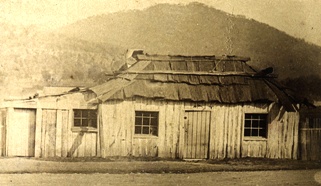
On the squatterage Benjamin would have been fully occupied in improving accommodation for his family and tending his livestock. It is most likely that he collected all wild cattle and horses he could round up and all unbranded horses or cattle he found. It is likely too that he also collected such branded horses and cattle as appeared in the area except perhaps those of his immediate neighbors. By 1840 it is said that he was possessed of 200 cattle and clearly having regard to the money he had when he bought theHaydonton land he was trading profitably.
For Eliza and her children conditions were bad in that accommodation was primitive and clothing and bedding were poor.
While there would have been ample meat and milk, other foodstuffs would have been difficult to obtain and expensive — the nearest store would have been at St. Aubins (Scone) about 70 miles away. Vegetables would have been difficult to grow in that area due to late frosts extending to about Christmas in each year and the cold of winter. Eliza was also cut off from female companionship while there may have been women on one or two of the other squatterages in the area Ellerston was about the nearest where any resided and those at that place would be unlikely to have anything to do with her.
During the period here Eliza may have given birth to one or two children who did not survive and she particularly, after becoming pregnant again, was exerting pressure on Benjamin to move her and the family into a village or town.
Benjamin began to seek land in the newly established township of Murrurundi which was nearer for a horseman than the established town of Scone.
At Murrurundi two auctions of town allotments were held in 1840 and two also in 1841 but in neither were any local residents able to buy all allotments being sold to established graziers, businessmen or expired soldiers.
In these circumstances Benjamin approached Thomas Haydon of Bloomfield who owned land along the Great North Road (now New England Highway) east and south of the town of Murrurundi to ask that he sell some of his land. After some hesitation Thomas agreed to sell him an area of 2½ acres on the south side of the Great North Road and immediately adjoining the ford over Page's River east of Murrurundi, for $150 (equivalent to about $40,000 nowadays). This high price for the land indicates that there might already have been a shepherd's hut on it as it is higher than the price of any other parcel of land sold except for the site of the White Hart Hotel where there was certainly a building on the land.
The land bought is now bounded by Mayne Street (New England Highway) Adelaide Street and Liverpool Street and Page's River. In 1842 it had a greater area than it has now as over the last century and more Page's River has cut into it.
The conveyance of the land to Benjamin is dated April 6, 1842 and before it could be prepared a survey creating the township of Haydonton had to be completed.
It is most likely having regard to the date of birth of their child Robert on April 23, 1842 that Benjamin and Eliza and their family were in residence before the conveyance was executed. He built what was described as a The house was whitewashed with doors and windows picked out in green. The windows themselves were glazed. He would certainly have had to obtain assistance to erect such a house in the time between his reaching agreement with Thomas Haydon and that when his family moved in.
It was probably the best house Eliza had ever had.
Benjamin also put down a well which provided ample water in the driest times — the first months of 1842 were very dry. He also erected three stockyards on the land and two gallows for hanging stock killed for meat.
He established a small peach orchard and a vegetable garden which not only supplied vegetables for himself and family but also produced surpluses which were readily sold not only in Murrurundi but also in the Liverpool Plains and Tamworth districts as until about 1851 the gardens of Haydonton were the chief sources of green vegetables.
There is no record of him conducting a butchery but it is quite likely that he bartered meat for goods required by himself and his family.
The work of erecting the house and improvements on his land
would have been his principal occupation throughout 1842 but he must from time to time have visited his squatterage for livestock and to increase his cattle and horse numbers. In fact Murrurundi was the nearest town to his squatterage which could be reached in a long days ride via Timor, Sergeant's Gap and the back country of Poitrel. He also appears to have leased some land along what is now Hall's Creek from Mr. Haydon.
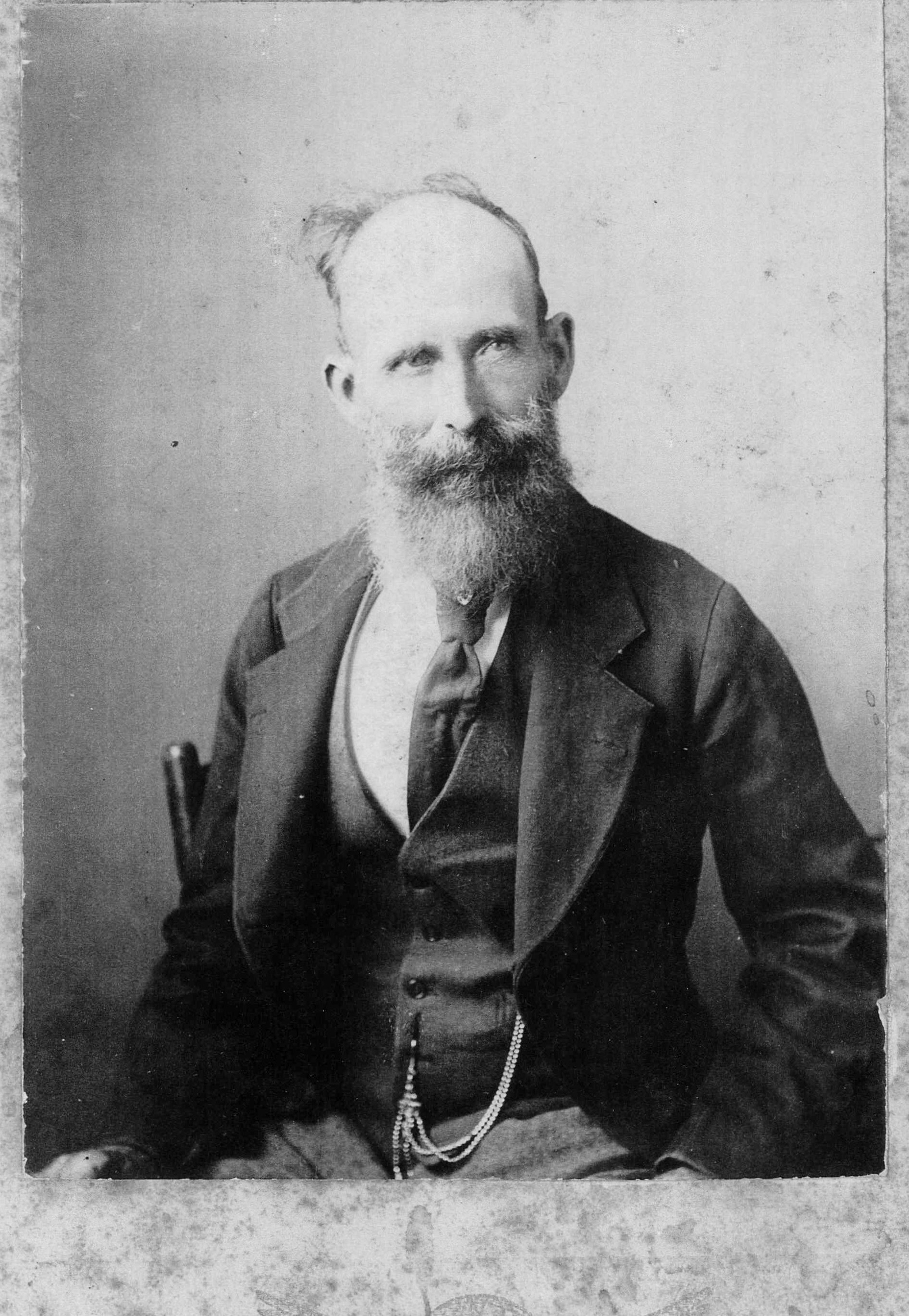 Also as Robert (right) is claimed to have been the first European child born in Murrurundi probably the family were in possession in January for Benjamin's first task was to construct a dwelling for his family and that would have taken time.
long low house
erected on the verge of the street and close to the ford almost opposite the later building now known as Bridge House
. The house was of wooden slabs and roofed with bark. It had three rooms plus a separate kitchen possibly the original building ∼ a blacksmith's shop and a butcher's shop ∼
possibly the latter may have originally been the meathouse
.
Back to the contents