
Museum chases concernsConcern at the major changes in State Rail operations Murrurundi Museum wrote to local member George Souris concerned about the heritage maintenance of the local railway station.
Whilst State Rail appreciates the Murrurundi & District Historical Society’s concerns it is imperatives that the state-wide costs of providing country services, both freight and passengers, be reduced by improving productivity and efficiency across the board.Unless urgent action is taken State Rail’s country operations will cost New South Wales taxpayers more than $3 billion over the next decade.With this in mind Booz-Allen report forms the catalyst for rejuvenating State Rail’s services and ensuring the viability of country rail services.At many of the country locations including Murrurundi the station building are sound and will no longer be required for State Rail’s operations. |
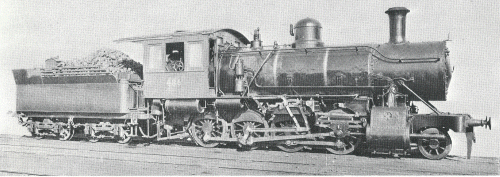
The Big J Baldwin-built 2-8 were normal motive power in the area. THE STEAM
|
 deals with one of the oldest and most important locomotive depots in the state, Murrurundi. Murrurundi's picturesquely located in the valley of the Pages River, a tributary of the Hunter. On the surface, it may seem strange to have three locomotive depots on the mainline (Singleton, Muswellbrook, and Murrurundi) so close together geographically, but they represent different eras, and different types of work.
Singleton and Murrurundi were what could be termed 'old' depots, dating from the earliest days of the line, whereas Muswellbrook came along much later, as the coal-field traffic developed in the region. On the other hand, the small depot of Merriwa, a sub-depot of Muswel1brook in recent years, was there for the convenience of working the branchline which junctioned with the mainline at Muswellbrook. |
Old |
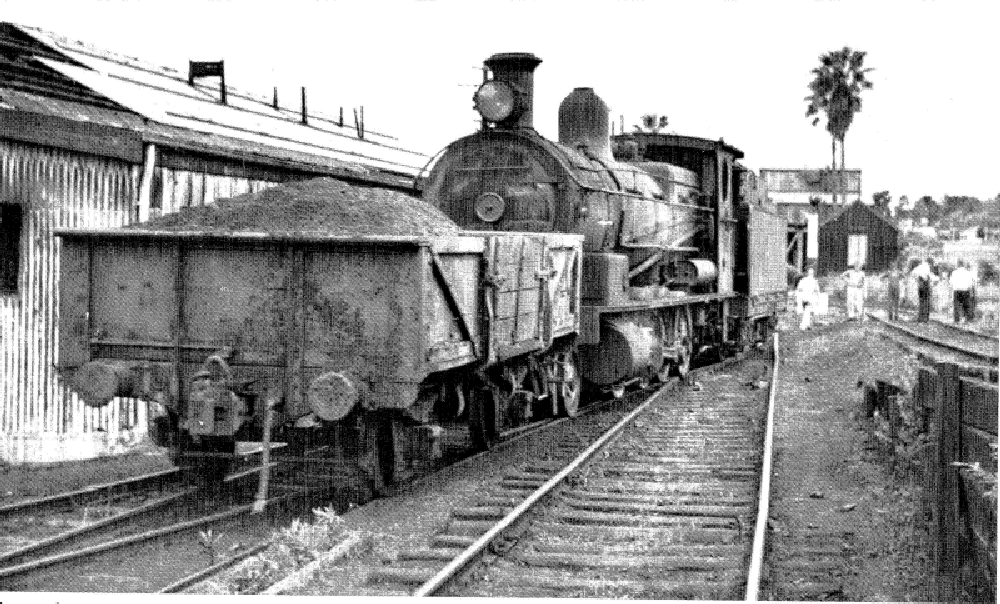
Doing the housework. Banker 5189 shunts an S truck of loco ashes beside the shed in 1960. The building in the right background is the records shed with the covered, elevated water tank behind. — M. Farrell
In May 1863, the 14m. 25ch. (23km) section of the line between Branxton and the town of Singleton was opened for traffic. Railway construction continued toward the north over the next six years, the 30 mile section (48km) between Singleton and Muswellbrook being opened on May 19, 1869. A number of contractors were involved in construction of this last mentioned section of line, including Randle & Gibbons, McNamara & Edwards, George Blunt and Larkin & Wakeford, all being well known in the construction business for the railways of this state. |
History |
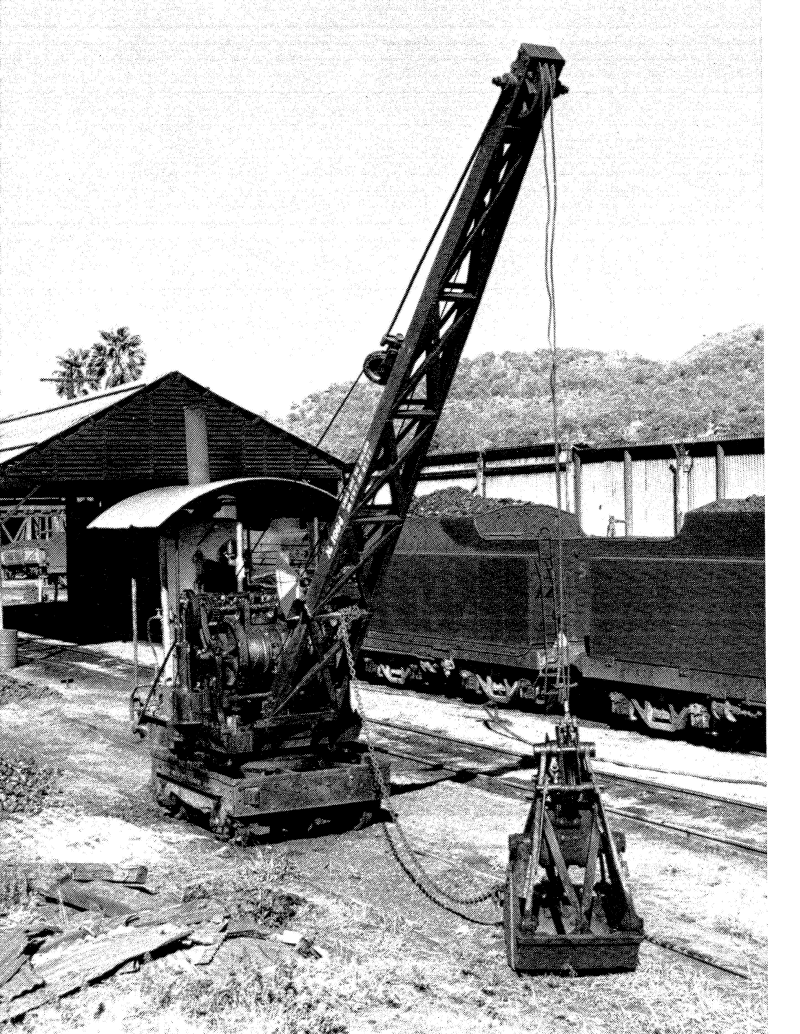
Three-ton coal grab 1064 at rest in 1965 (Harman 1918 original number Lo39 is now in Thirlmere in a dismantled condition. — R. K. Booth
The line rises from 19 feet above sea level at Maitland, to 2073 feet (632m) in the Liverpool Range at Ardglen. Bank and pilot engine work was commonplace over this section of the line in steam days, and Murrurundi depot provided locomotives for both mainline and bank engine work. | Locomotive |
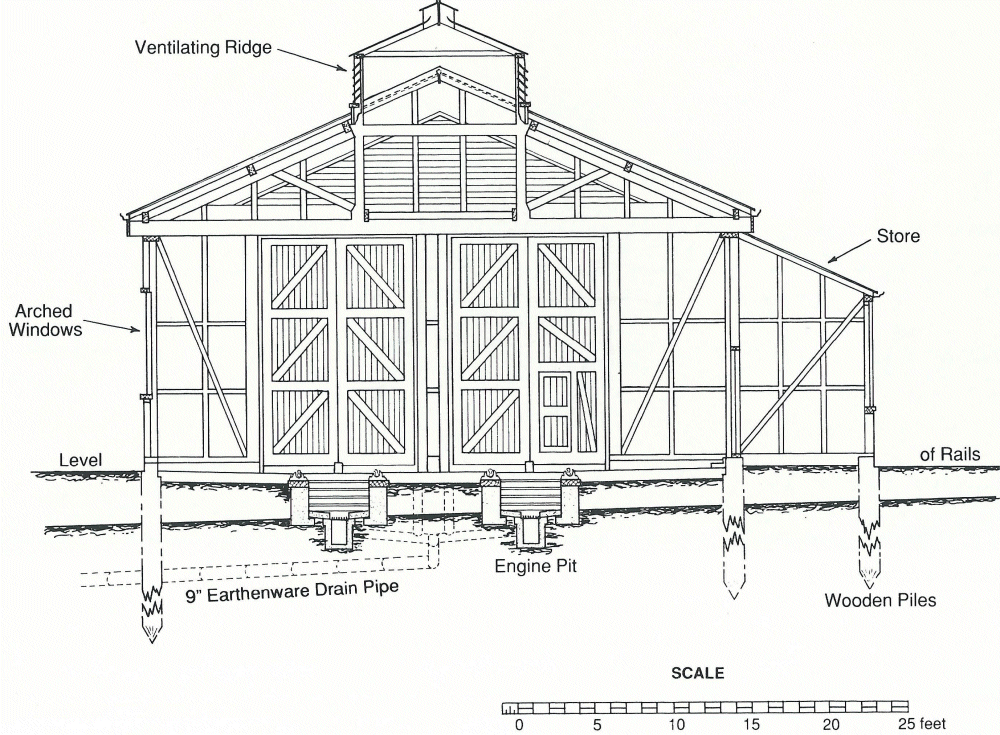
The first engine shed which sat north of the Murrurundi station on the western side of the mainline just before Halls Creek.
On September 12, 1871, an agreement was signed between the Commissioner for Railways and the contractor, James Stephens, for construction of a two-road engine shed at Murrurundi. | The old |
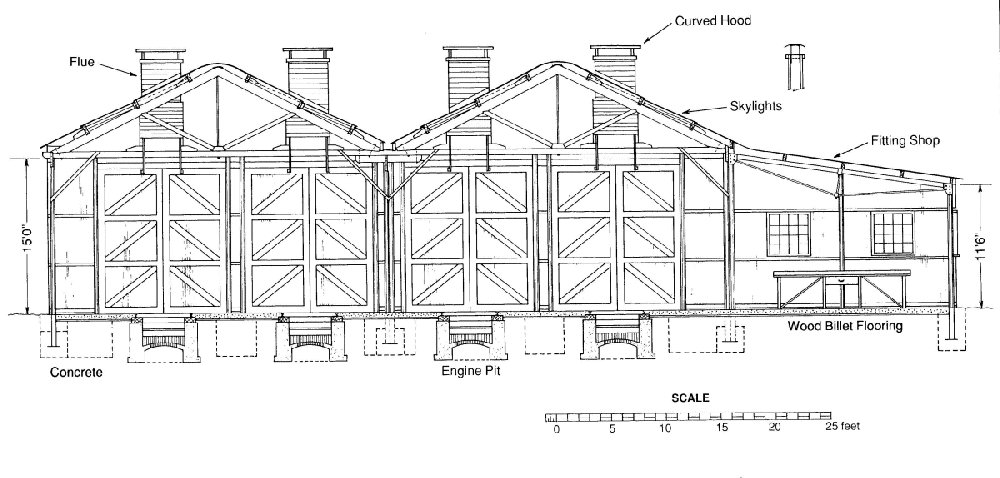
The second engine shed was to be built on the flats over Halls River bridge, again on the western side of the mainline.
In November 1898, £2588 was allocated for the construction of a new locomotive shed, coal stage and water tanks with stands, the successful contractor being W. Taylor and Sons. | The new |
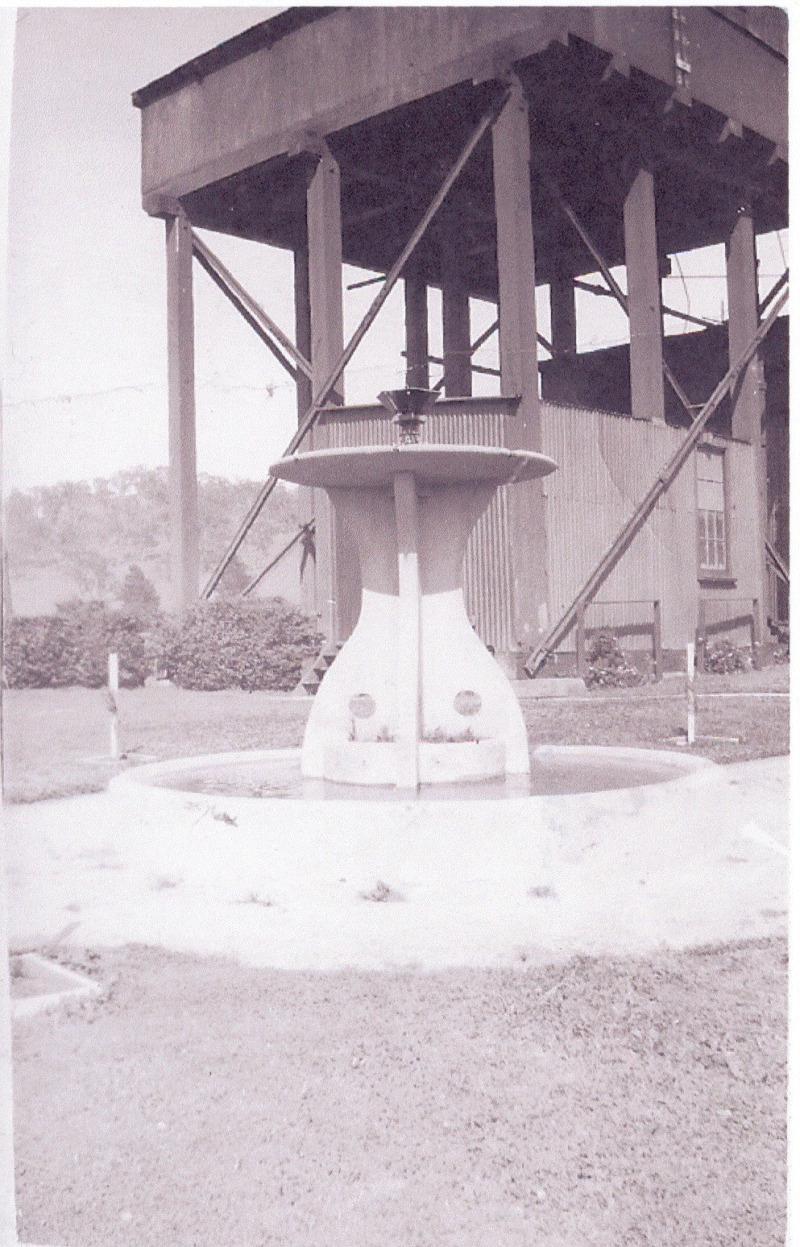
One of the two watertowers in the Murrurundi complex.
At the Locomotive Officers' Conference of July 1948, approval was obtained for the installation of electric lighting in the shed, District Locomotive Engineer's office and the rest house (barracks). This appeared to be the last improvement carried out on the depot facilities and for the next 10 years nothing was done to improve working conditions or locomotive servicing. The depot fell into disrepair over the ensuing years, as a result of lack of expenditure on essential maintenance and by the early 1950s, it had a dilapidated appearance. On August 12, 1965, the locomotive shed area and associated sidings were closed, and locomotives (diesel-electrics had taken over by this time) ceased using the former depot area. Some crews remained at Murrurundi for a further 12 months. In September 1966, it was noted that the loco depot at Murrurundi was being demolished, the water service had been completely dismantled, two of the elevated water tanks had been scrapped, while a third had been sold to the Shire Council. | Let there |
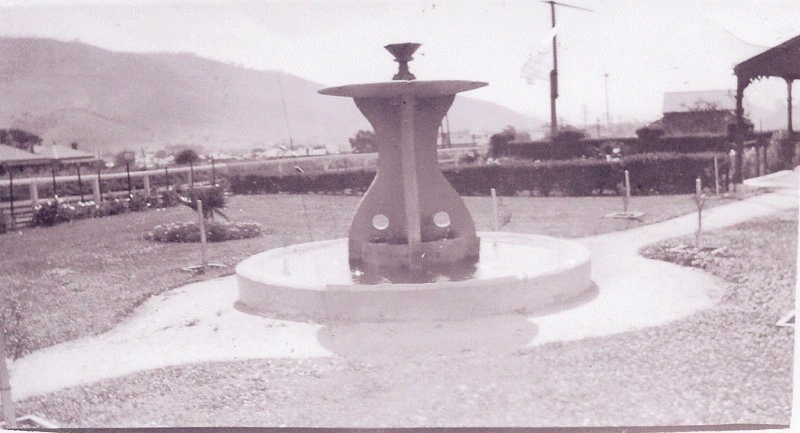
The pride of the yard, the fountain
.The days of this old depot were over, 74 years after it had been noted as "opened". The original engine shed at Murrurundi was a two-road, straight-through style building, fitted with double swing doors on each end of each road. It was 107'4" long by 40'0" wide (32.7m x 12.2m). No smoke chutes were provided on the roof, smoke dispersment being provided by a ventilating ridge running almost the full length of the roof peak. Eight arched windows were fitted to each side of the building, the roofing and wall material was galvanised corrugated iron, and the flooring of the shed was 9" thick (230mm) 'hardwood paving blocks'. A store measuring 26'8" long by 9'0" wide (8.I5m x 2.74m) was built, attached to one side of the main shed, the sloping roofbeing an extension of the main shed roof. The floor of the store was also hardwood blocks. A rather unusual aspect of the design was the provision of two inspection pits each 40' long (12.2m), on each road within the shed, four in total, a pair being placed end to end, rather than the usual arrangement of having one long pit on each road. The usual timber work-benches were provided in the main shed. | Halycon days over |
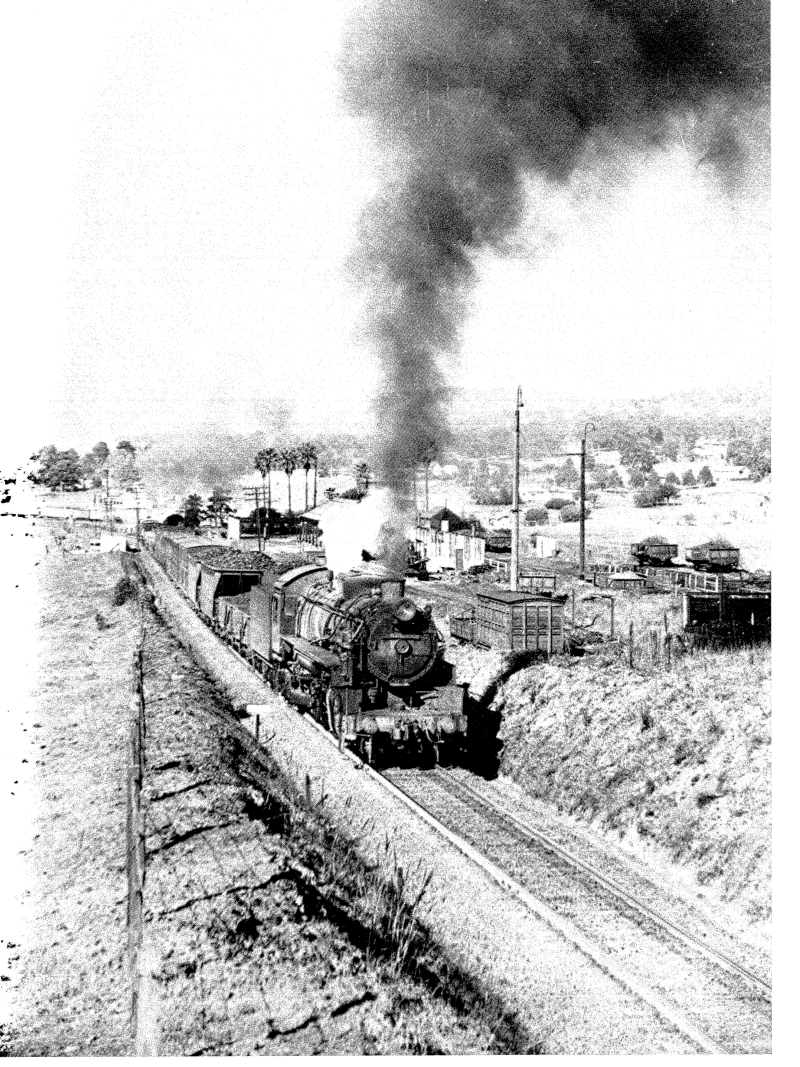
Overview from the north as 5483 steams up the short section of 1 in 50 past the depot. The turntable is on the extreme right. — G. Pegg
.About 1899, a drawing was issued for the construction of a new engine shed at Murrurundi. This 'new' shed was actually two engine sheds of identical design built side-by-side to produce what was, in effect, a four-road locomotive shed. Each shed was 168'0" long 31'0" wide (51.2m x 9.45m) giving an overall width of 62' (18.9m). Each shed had a gabled roof, but no ventilating ridge was included, smoke dispersion being achieved by six individual smoke chutes above each road (24 in total). Cladding for the shed was galvanised corrugated iron sheet on the roof, walls and doors. As with the original shed built in Murrurundi, the flooring was wood billets, each 9" thick (230mm). Each shed road was fitted with an inspection pit, 150' (45.7m) long. In addition, 35' (10.7m) long 'outside' pits were constructed on three of the roads at the northern or Werris Creek end of the shed. Natural lighting in the shed was provided by a number of 4'0" (1.2m) square windows in the side walls and an arrangement of skylights on the roof slopes, a total of 24 being fitted. As usual, timber work benches were provided along the side walls inside the main shed. An attached shed foreman's office and fitting shop were built external to the west wall of the main shed. Construction also included a store and an inspector's office near the shed. | Drawing |
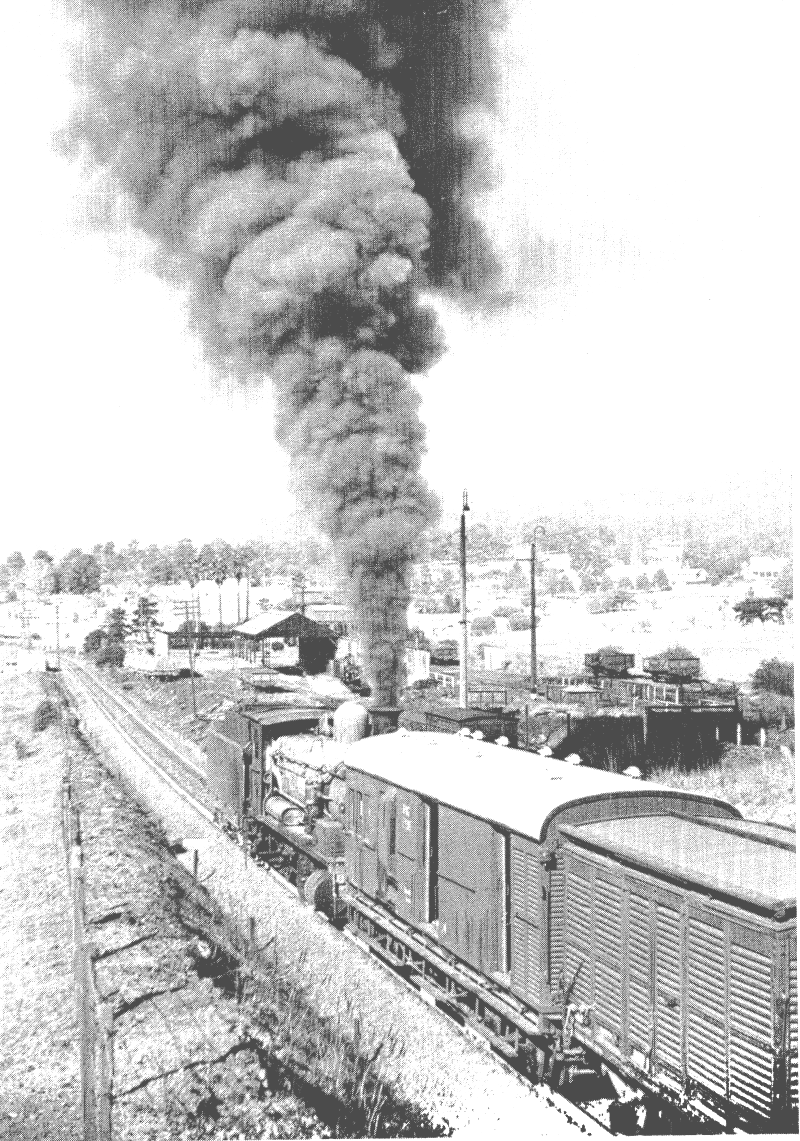
Guard gets an earfull on June 12, 1965. Things were alreay delapidated as you can see in the backgound of 5483 pushing a goods out of Murrurundi
— G Pegg
The flooring of the fitting shop was also wood billets. The layout of the depot at turn of the century, apart from the main shed and the buildings mentioned above, included a drivers' barracks, two elevated water tanks, two low-level coal stages and a 60' (18.3m) diameter turntable. This turntable was originally located adjacent to the Newcastle end of the shed in a rather cramped location, but was soon moved to its final location at the Werris Creek end of the depot area. The turntable in use during the last steam years was a 60' (18.3m.) diameter Sellers, ball-race type, Way & Works Branch ref. number 2086. By the 1930s, the loco facilities at Murrurundi had expanded, and with the relocation of some structures and trackwork alterations, the layout had improved. Included in these changes were additional ash pits, water columns and elevated water tanks. The coal stages were positioned to suit better the fueling of locomotives, and a depressed ash road (to assist with removal of firebox ashes) had been added. Provision had been made in the original drawing of 1899 for the construction 'by the Railway Commissioners' of a sand furnace adjacent to the main locomotive shed. A drawing, signed by E.E. Lucy, and issued in 1922, shows a sand furnace and a sand house located in this area of the depot, but by the 1930s, only a simple sand bin utilising dry sand sent up from Broadmeadow depot was in use, located at the northern end of the shed adjoining the fitting shop. | Turntable |
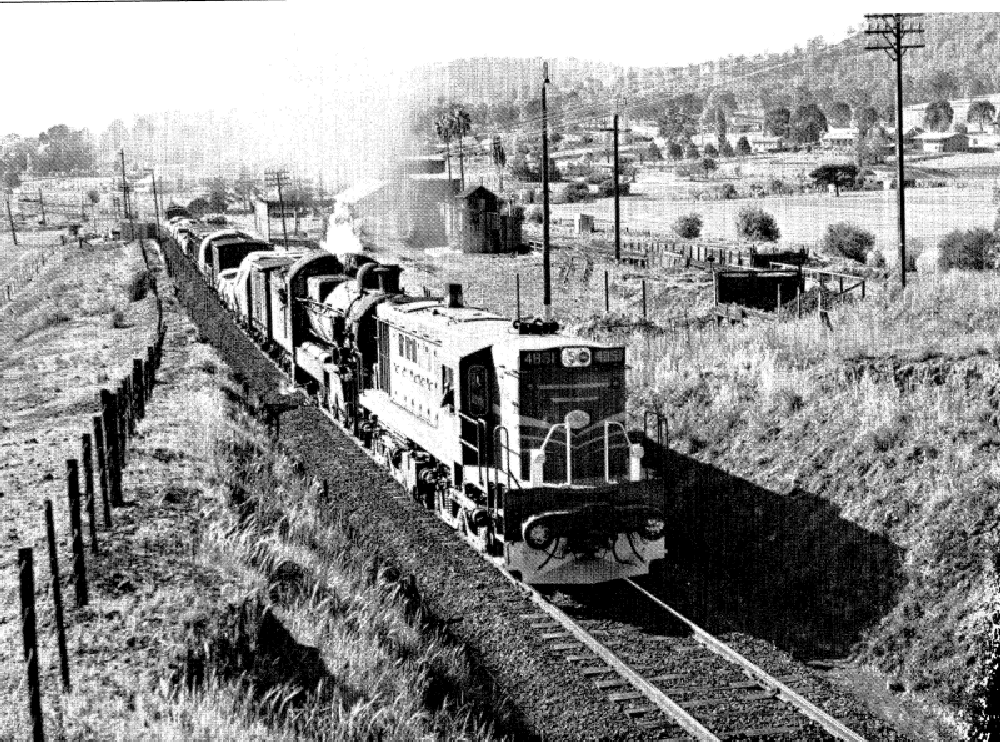
In was usual in the early days of the 48 class bankers to lead as seen here with 4861 leading 3521 out of Murrurundi in 1965. — J. S. Glastonbury
The loco water supply to the depot and the station was upgraded in 1931, the arrangement being approved by Chief Mechanical Engineer E.E. Lucy. A drawing was issued in October of that year illustrating the arrangement of water tanks and relative levels of the water supply system. Supply was obtained from the Page's River by a pipeline/flume system almost three miles (4.8km) in length, the river rising in the Liverpool Range behind the depot. The long pipeline was used to obtain gravitational feed, rather than using pumps to lift the water from the river in the town, where it is considerably below the level of the depot. The difference in levels between the flume on the dam in the river and rail level at loco and the station was 155 feet (47.2m). The water was fed into a series of cast-iron elevated water tanks at various levels on the hills behind the depot, one of 40,000 gallons (182kL), and two of 20,000 gallon capacity, supplying the water columns located at the station and at loco. A water softening plant was also located in the pipeline. In 1952, this large water softening plant was relocated adjacent to the two elevated tanks in loco. The 1961 Local Appendix to the Working Timetable (North) quotes Murrurundi loco as having a 9" (230mm) water column and 2x6inch (150mm) stand pipes for locomotive water supply. | Water |
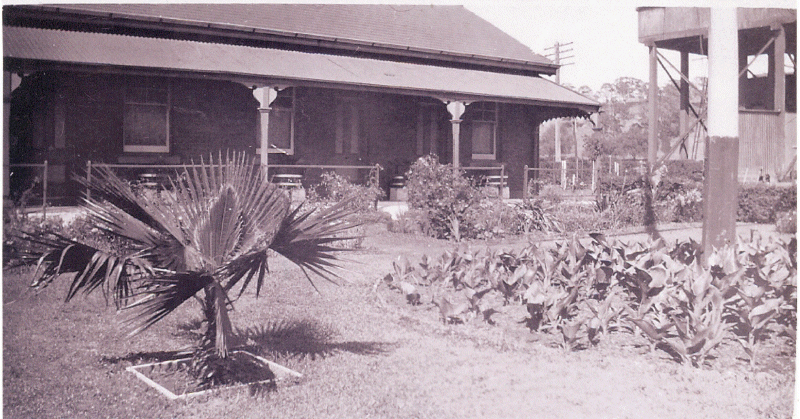
The engineman's depot. In its day a respite for tired drivers.
Like many of the old depots, Murrurundi did not possess the luxury of an elevated coal stage or a mechanical coal elevator, and all coaling of locomotive tenders was carried out by hand from the low timber stages. In the early 1960s, a 10 class steam coal grab was sent to Murrurundi to assist with the coaling of engines but only remained for a short period of time. Loco barracks were located near the engine shed at the Newcastle end, and consisted of a building containing 'about eight bedrooms and a kitchen'. To quote a Werris Creek driver, "Murrurundi barracks had no ceiling, the roof peak and all the timbers being visible from the inside. The dividing walls of the rooms were of minimal height with no ceilings above, the area above the walls being open space. Any noise could be heard in all rooms simultaneously." Murrurundi barracks saw infrequent use during the latter steam days, mainly by men on loan from North Coast depots, such as Grafton and Taree, during the heavy wheat seasons. They were also used as single men's quarters, where single traffic or loco men could live in the barracks whilst employed on local work. In other instances, crews from Broadmeadow or Muswellbrook would use the barracks if some delay or unforseen circumstances on the main line, such as floods, derailments or excessive hours, meant the crew could not continue on. | Barracks |
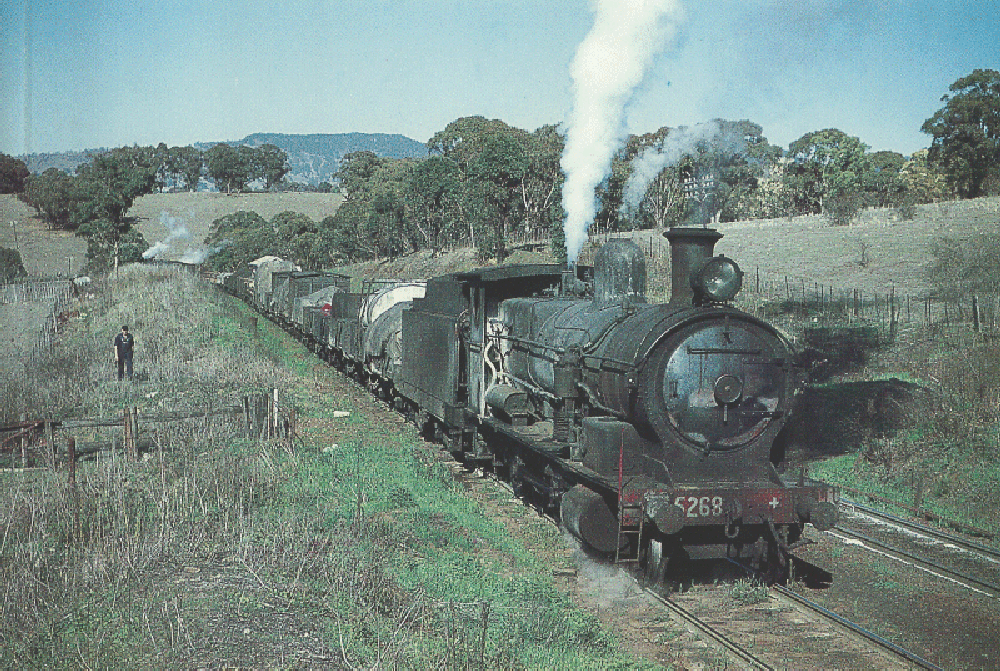
Well-weathered 5268 at the head of 187 goods awaits a crossing in Pangela loop between Murrurundi and Ardglen on July 31, 1963. Fireman (on the bank) is no doubt in need of a spell. — R. D. Love
The only shower facilities for the entire depot were located here, hot water being provided by a chip heater. No separate locker room was provided, crew lockers being fixed to one wall inside the main shed. In the early days, when Murrurundi was the hub of locomotive and traffic activities in the north, this building seems to have been used entirely for the administrative side of locomotive operations. The Steam Shed Inspector and his staff then occupied the entire building. In recent years, however, the DLE and the clerk/timekeeper only required the use of one room, the remainder being converted to barracks use. As noted previously the shed and servicing facilities fell into a dilapidated state during the early 1950s, large cladding sheets were not replaced when they fell off or corroded, and by the 1960s, the main shed building was in an appalling state. Demnolition and removal soon followed. | Chip |
As with Singleton depot, documentation of locomotive allocations to Murrurundi during the latter part of 18th century is difficult to obtain. In a past issue (September 1941) of the Australasian Railway & Locomotive Historical Society Bulletin a fine article, titled "North of NewcastIe in the Nineties", contains descriptions and information on the locomotives and working applying to the period. To quote selected parts relevant to Murrurundi: ". . . the next depot was located at Murrurundi. This was an extremely busy show, as practically in every case, engines working goods trains were changed, and in addition, goods trains had to be pushed from Murrurundi to Ardglen, and in the case of southbound trains, from Willow Tree to Ardglen." These notes go on to quote the Baldwin J131 (Z28) class 2-8-0s as the main motive power on goods north from Murrurundi, with the same engines and the 'Native Bears' or J522 class (also renumbered as 28 class) as the push-up engines. "For a time, one of the One class 2-6-2 saddle tanks (later Z26 class) was stabled here, and earned its keep on push-ups and indulged in similar push-up duties on goods trains from Wingen to Murrurundi. About the year 1898, two of the Baldwin 0 class 4-6-0s (Z23 class), numbers 446 and 447 (later 2301 and 2302) arrived in Murrurundi and these gave the firemen a lot of work." | The locomotives |
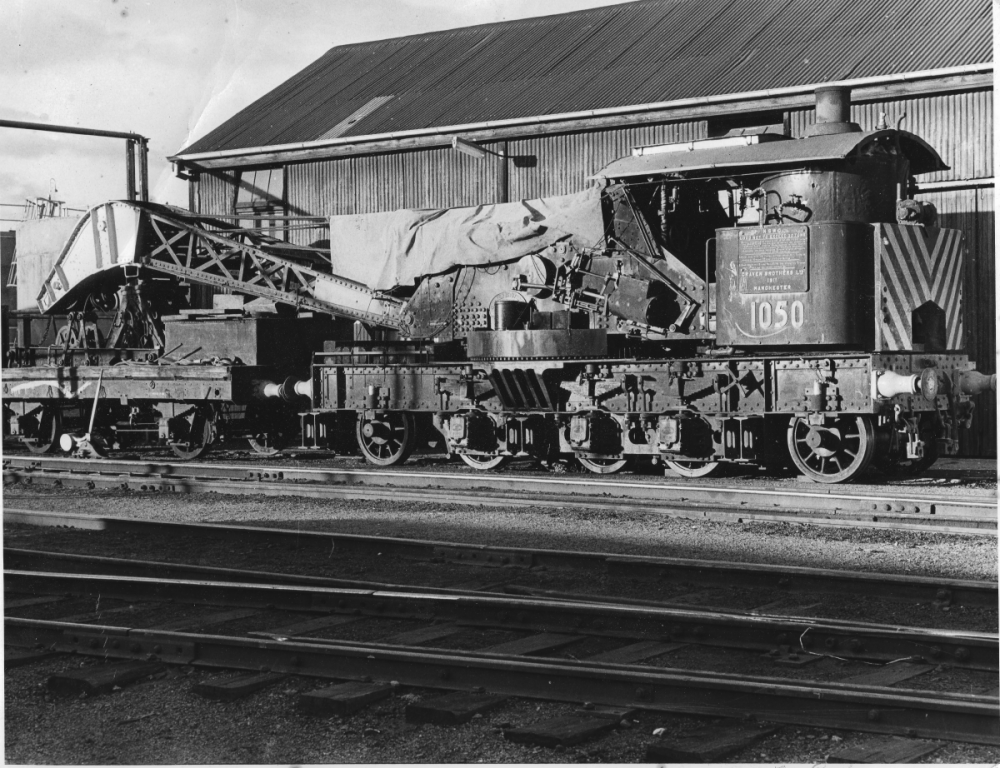
The heavy lift crane 1050 stationed at Murrurundi. — R. Tuckwell
From these notes, it is seen that in the 1890 period Murrurundi played host to B (Z25) class, J class, 0 class, I class, plus an assortment of C (Z12) class, D (Z15 & Z16) class, and the K class. In 1912, Murrurundi (along with Hamilton and Eveleigh) possessed a 30 ton, steam accident crane which, according to the Weekly Notice " ... could run on the mainline in the area at the same speed as a T class engine, 30mph." Transfer of locomotives to and from various depots, was recorded during the year 1917. Typical transfers during that year are listed below, the abbreviation 'MDI' is used for Murrurundi. By the end of 1917, the official allocation to Murrurundi depot was: D263 (1603),D335 (1626), D345 (1636); I127 (2608), I128, (2609), I400 (2618); J133 (2802), J136 (2804) J138 (1008) J141 (2806) J523 (2807) J524 (2808), J133 (2802), J136 (2804), J138 (1008), J141 (2806), J523 (2807), J524 (2808); P591 (3268), T731 (5101), TF 974 (5356). | The |
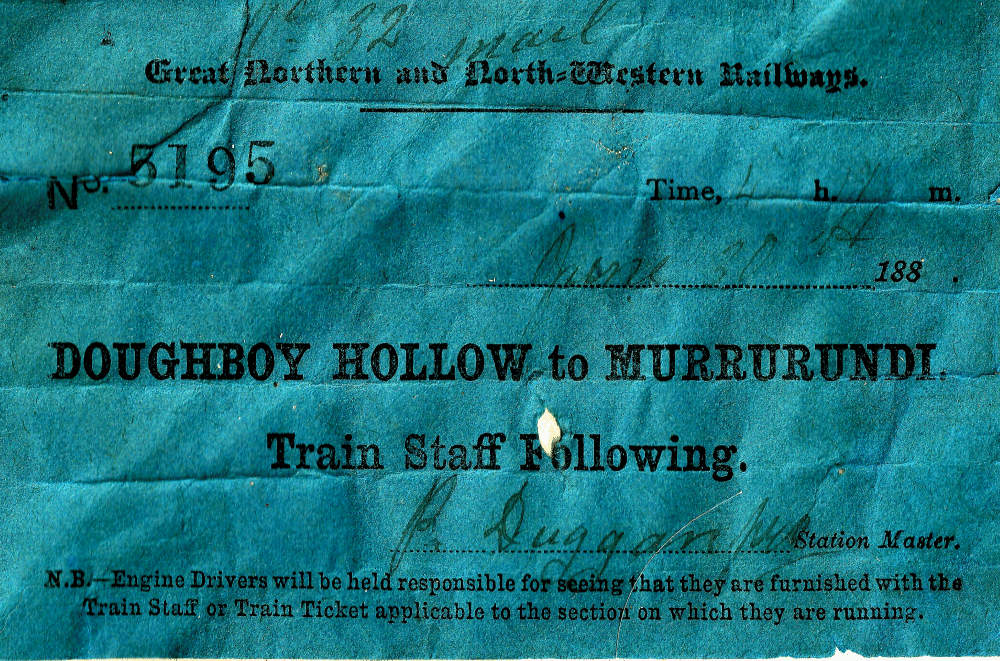
A Train Staff Following ticket issued in the 1880s to the driver giving permission for the next section of track. — Ron Tuckwell
Typical transfers and allotment changes which took place during the next three years included: September 1932 ~ 5120 MDI to Port Waratah; 5122 MDI to Port Waratah; 5007 Port Waratah to Murrurundi; March 1933 ~ 5112 Port Waratah to Murrurundi (exch. with 5101); June 1933 ~ 5104 Werris Creek to Murrurundi (in lieu of 5192). In July 1933, engines 5110 and 5156 were placed in storage at Murrurundi, and remained there until June 1937, when they were then hauled dead to Eveleigh Workshops for stripping. This move took place four months after the depot had lost its working allocation of locomotives, in February, 1937. In November 1933, 5104 was also placed in storage at Murrurundi loco, but in December 1936, was sent dead to Eveleigh Works and returned to service. On July 31, 1933, the allocation to the depot stood at six of the 50 class 2-8-0 goods engines and during the next four years, the number of engines working out of the depot remained fairly static. In November 1933, a 30T class was loaned to the depot from Werris Creek but returned to its home depot the following month. In mid-1934, five of the 50 class were allocated there, by 1935 this had increased to six, and by the start of 1936, one saturated 50 class, and five saturated 53 class were working from this depot. | Transfers |
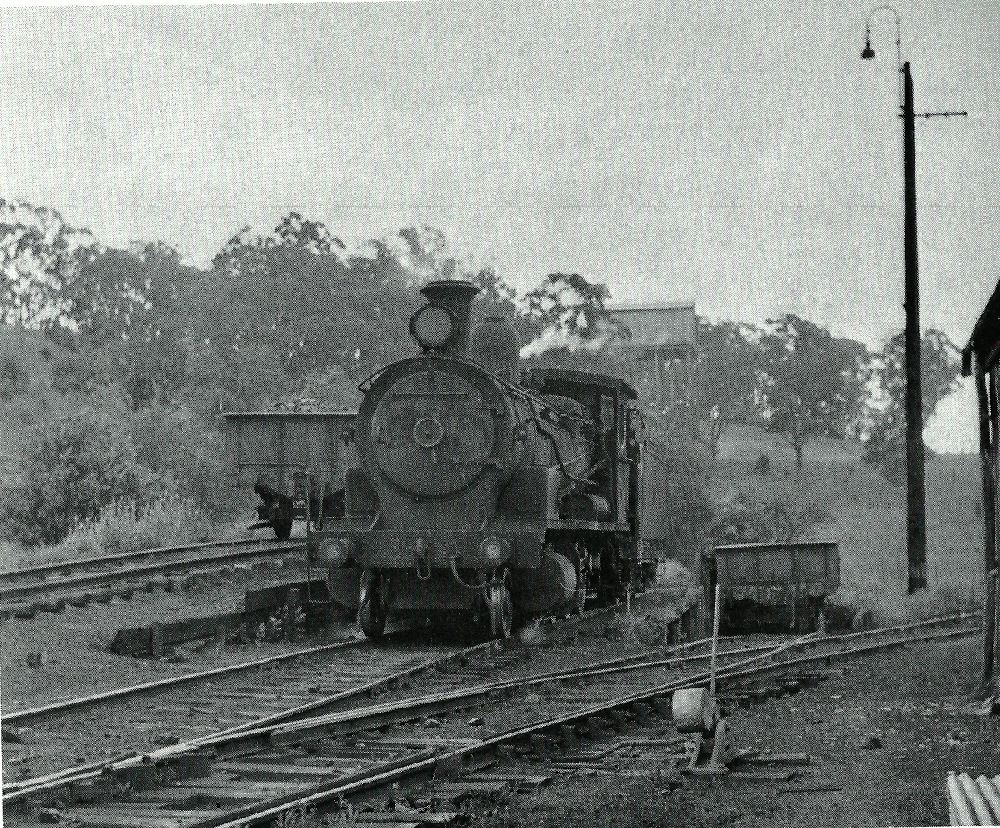
Bank engine 5436 backs on to the turntable. The elevated siding on the left is the ash siding road on the right the depressed ash siding road. In the background is the water tower. — M. Farrell
Toward the end of 1936, four engines were working from there: one superheated 50 class, two saturated 53 class, and one superheated 53 class engine. In December 1936, engines 5119, 5306 and 5415 were transferred to Broadmeadow, but remained at Murrurundi on loan until replaced by engines of the same class. Each month, at the Locomotive Officers' Conferences (a series of meetings held by senior Mechanical Branch officers), a table was presented titled "Number Of Engines Counted Working In Each District" and it sets out the precise types of locomotives available and working for each of the Locomotive Districts in the state. By the middle months of 1937, Murrurundi Locomotive District had "nil" locomotives counted working. In February 1937, the last locomotive, 5322, transferred away from Murrurundi to Port Waratah depot. Steam locomotives never returned on official allocation to this depot, all bank engines in subsequent use being based at either Werris Creek or Broadmeadow, particularly the latter. | The |
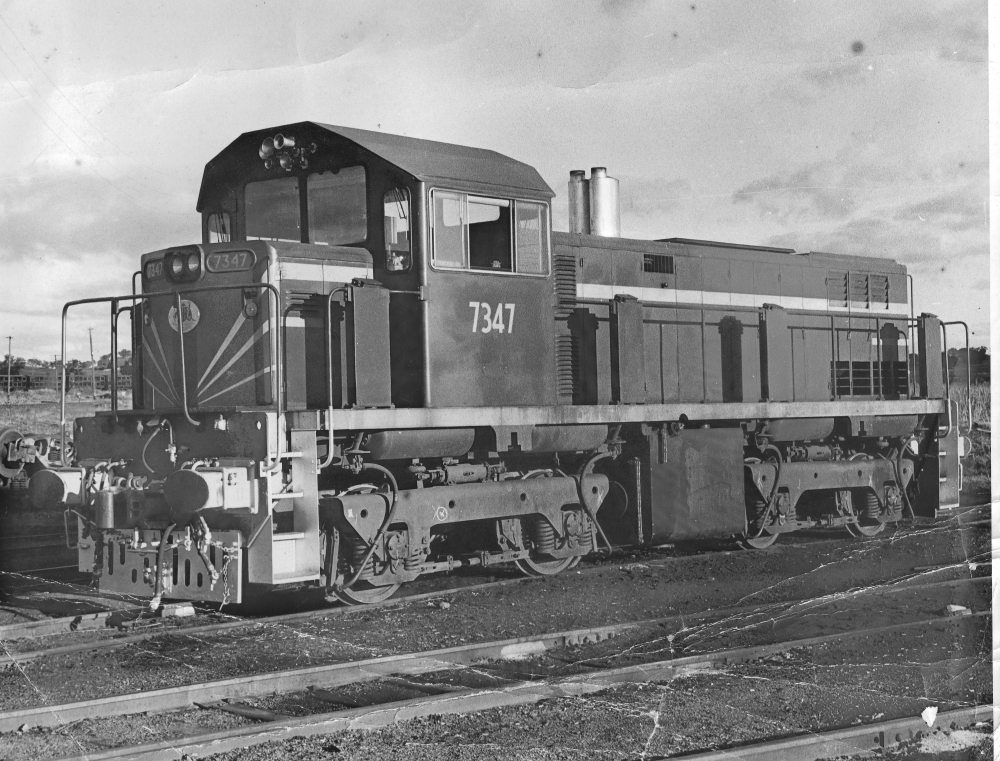
A diesel-driven hydraulic locomotove made by Walkers in Queensland captured on the siding at Murrurundi. — Ron Tuckwell
In the 1950s, all classes of Standard Goods engines (50, 53 and 55 class) were used as bank engines but from the late 1950s until closure in the mid-1960s, only 53 and superheated 50 class were to be found there. Small-tendered 50 class were commonplace and as many as seven or eight engines could be shedded in the old depot at anyone time, especially in wheat and stock times. In the late 1950's, four engines were stationed at Murrurundi depot for bank work, being 5037, 5143, and 5254, but officially they were still allocatedd to Enfield or Broadmeadow. On January 29, 1964, at the height of the 1963/64 wheat season, locomotives 5192, 5345, 5439 and 5483 were in the shed, with 5032 and 5242 out on the road on bank work. This represented a typical line-up during visits at that period of time. In the mid-1960s, with increased dieselisation and more through loads, the number of Standard Goods engines working as bankers declined, and in the winter of 1965, coal-burning 59 class joined in. These were Broadmeadow-based engines, but came down from Werris Creek, performed a few banks, then returned to Werris Creek. It was usual to find one (sometimes two or three) on bank work at any one time. Also during the winter of 1965, Locomotive Inspectors arrived in Murrurundi to commence crew training of the local men in the operation of the 48 class diesel-electrics. For a period in mid-1965, the 48 class and the 59 class shared the banking jobs on both sides of the range. | The |
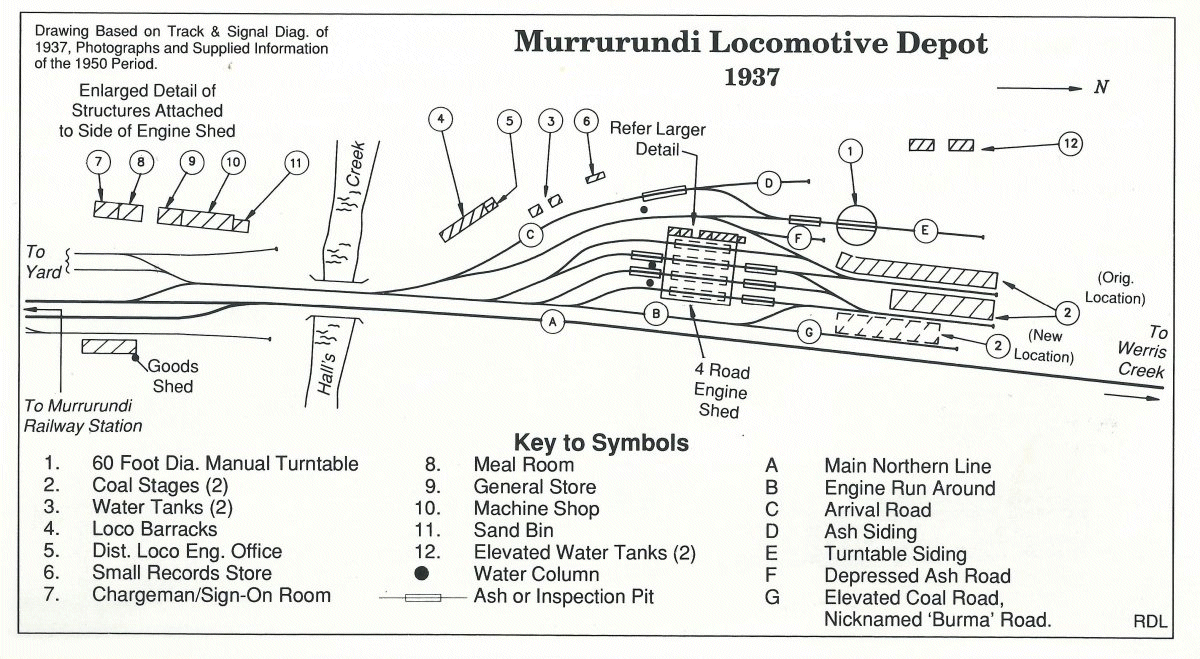
The layout of the locomotive depot yard in 1937. — Track and signal diagram
The 59 class did not remain in the area long as bankers and by late 1965, Werris Creek-based 48 class took over this work. Full use of the diesel-electrics on both main line and bank work followed in 1967, and steam locomotives never returned to the old depot. Crews. As in the case with locomotives, the precise number of men working out of a depot in those far-off days is difficult to obtain, mainly through lack of accurate documentation. Again it is necessary to turn to previously published information, in particular A.R.H.S. Bulletin of November 1968, where an article by K. T. Groves relates the history of retired Murrurundi engineman, Percy Budden. Mr Budden joined the locomotive staff at Murrurundi in 1901, moving on to Wellington depot in 1912. "The main depots on the main northern line were then at Hamilton, Murrurundi, Armidale, Tenterfield, and Narrabri West. Werris Creek was only an out-depot of Murrurundi and had approximately four sets of men with regular jobs, and an allotment of four engines. In addition to drivers and firemen, Murrurundi had a Steam Shed Inspector, a Leading Fitter and Leading Boilermaker, fitters and boilermakers, and a full running shed staff, necessary as all trains changed engines for the run north." By 1904, the depot was noted as being under the supervision of Steam Shed Inspector E. Fletcher. Staff promotions noted in Weekly Notices of 1912 saw the appointment of the then Murrurundi Inspector J. Little to a similar position at Penrith depot, his place being taken by G. Watson, former Inspector from Junee depot. By May, 1920, the depot was under the Control of Steam Shed Inspector W. Jarman, but a few weeks later, the senior position in the depot was reclassified to that of Fitter-In-Charge. It is assumed the changing status of Werris Creek depot, which became the principal depot in the north of the state, would have had some influence on the alteration. | The |
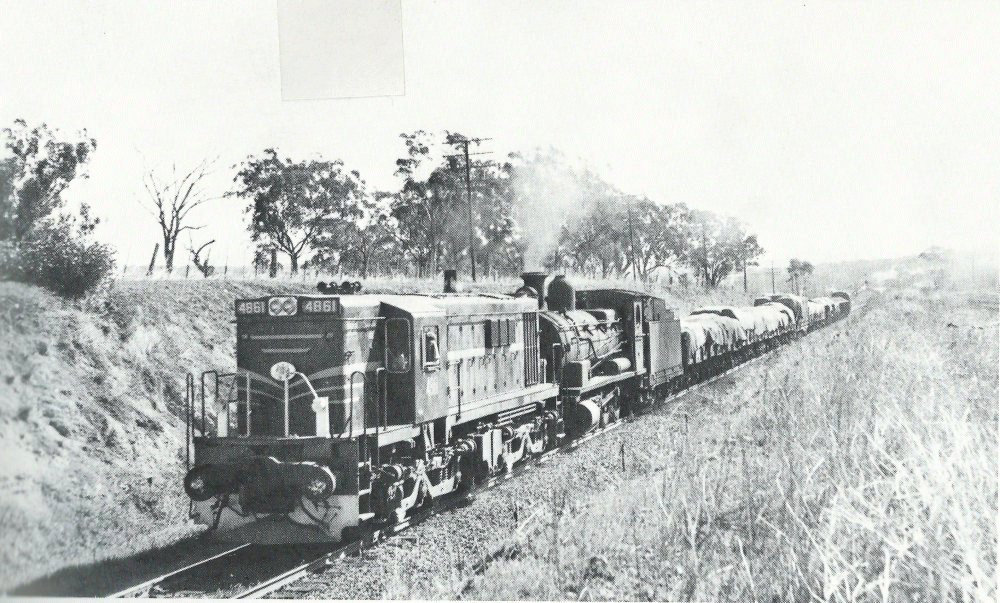
48 class makes it appearance as bank engines mid-1965 and remained in that duty up until mid-1980s. — R. D. Love
The status of the Officer-in-Charge of the depot changed again a few years later. The 1930 Local Appendix (North) notes the Steam Shed Inspector as Mr. G. Lesmond, his sphere of responsibility then being locomotives working in the area bounded by Muswellbrook in the south, Willow Tree in the north and the Muswellbrook to Merriwa Branch. From the 1940s through to the 1950s, the number of men working out of Murrurundi depot varied between 20 and 45, depending on seasonal traffic. This traffic (wheat, wool and livestock) was affected by good or bad seasons, and droughts and just as the seasons governed the traffic flow, so the work in the mainline depots (e.g. Werris Creek) was affected. The crew numbers in the bank-engine depots were also adjusted to suit the need. Of course, the opposite applied sometimes, with insufficient local men to cover minor peaks in work and then, men from either Werris Creek or Muswellbrook were used as bank crews. During the last 20 years of operation, average crew numbers were made up as follows:
| Staff |
Fitters and boilermakers were not normally 'on the strength' of the depot, so the working District Locomotive Engineer, assisted by one of the shed labourers, carried out any running repairs on locomotives as required. If more substantial repairs were needed, fitters or boilermakers came from either Werris Creek or Broadmeadow depot. Similarly, no store men or call boys were employed in the depot during the last 20 years, one of the shed labourers doing the store work (preparation of kits, etc.), attending to the cleaning and preparation of the respirators, and performing some crew calling duties on the day shift. Both of these men also did loco yard cleaning and some gardening if needed. During the last 30 years as a steam depot, the Murrurundi men were qualified for the Standard Goods engines (50, 53 and 55 class), and toward the end the 59 class and then the 48 class dieselelectrics. All cleaners were acting firemen and carried out fueling duties, some calling of crews, and firing in seniority order. To quote a long-time Murrurundi driver: "The cleaners had quite a hard job, fueling engines by shovel from either S trucks or the coal stage, unloading coal from trucks onto the coal stages, raking out ash-pans, cleaning smokeboxes, shovelling down tenders of all down mail trains and some goods trains. It was not unusual for the engine on a down goods train to cut off on arrival at Murrurundi and go into loco, there to have the tender topped up with coal after the long slog from Broadmeadow". "On the day work, a shed-fireman and his mate signed on at 6.05am, and had to do the rostering of the crews, engine preparations, shunting in loco, as well as perform the occasional assist job." On August 20, 1966, the remaining Murrurundi men (nine enginemen and one shed labourer) were transferred to other depots (such as Taree, Broadmeadow and Port Waratah) bringing to an end 70 years of locomotive enginemen in the town. | Bring in |
Referring again to notes published in A.R.H.8.Bulletin, September 1941, it can be seen that in the final years of the 18th century, Murrurundi was an extremely busy and important railway centre. The District Office, the headquarters for the administration of the railways in the northern area, was located there from 1896, and as well it was the main centre of locomotive activity. Most trains changed engines, especially goods trains, pilot and push-up engines were supplied for the climb over the Liverpool Range (both sides) and Murrurundi also supplied the bank engines used for pushing up the grade north of Werris Creek, this latter place only being a small junction town at the time. Apart from this, on May 6, 1895, bank-engine working for trains was introduced between Wingen and Murrurundi, and Murrurundi depot supplied the engines. | Murra |
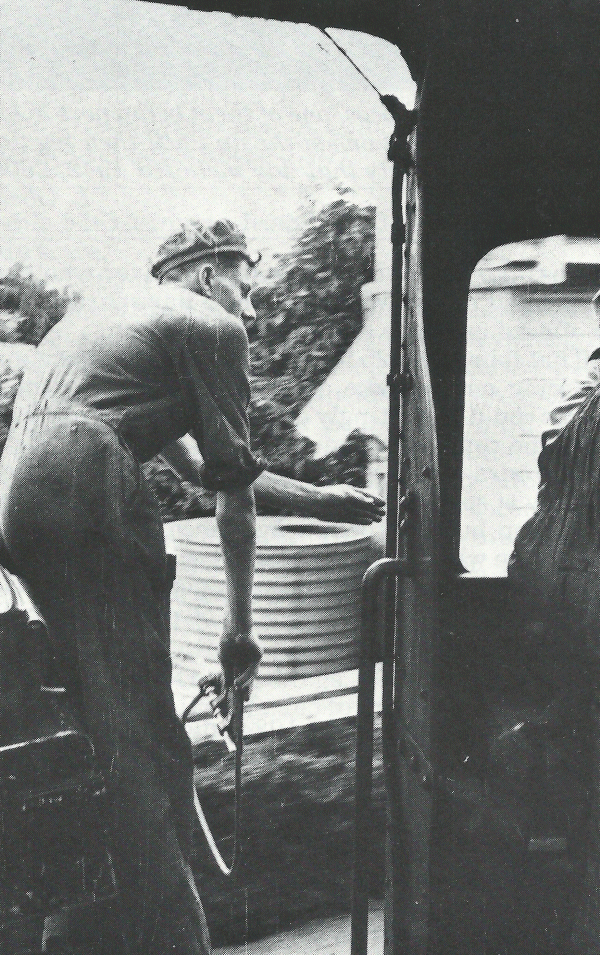
The fireman on 3510 at the head of No.9 exchanges the staff at Blandford. R. D. Love
Weekly Notice of May 1895 issued Special Instructions regarding rear-end banking of down trains from Wingen, especially the situation whereby the banker remained behind the van of the train after passing the top of the grade and ran downhill toward Blandford and along the near-level sections to Murrurundi, still behind the train. When a bank-engine was required, the station master at Singleton was to inform the SM Murrurundi of the need for a bank-engine for a particular down train. The SM Murrurundi then arranged for a bank-engine to depart Murrurundi and proceed to Wingen. He also advised all stations along the way as far as Scone of the time of the additional light engine proceeding to Wingen. A matter of a few days after the above instructions were issued, a set of Supplementary Instructions was issued covering the requirements of the use of Westinghouse-braked equipment on these trains, and also permitting the assistant engine to go on the front of the train from Wingen. These instructions also advised that "A passenger engine will be sent from Mnrrurundi to Wingen attached to No.8 passenger to meet No.63 down goods train at the latter station. This engine will assist No.63 in the rear to Blandford, then remain at Blandford until No.63 has reached Murrurundi, and permission has been given for a tablet (single line token) to be withdrawn for the engine to follow. As this light engine will be running tender-first from Blandford to Murrurundi, the speed must not exceed 15mph over any portion of the line." From this, it can be seen that the rear-end assistance from Wingen to the summit of the grade at Blandford was carried out with tender-first engines. | And then |
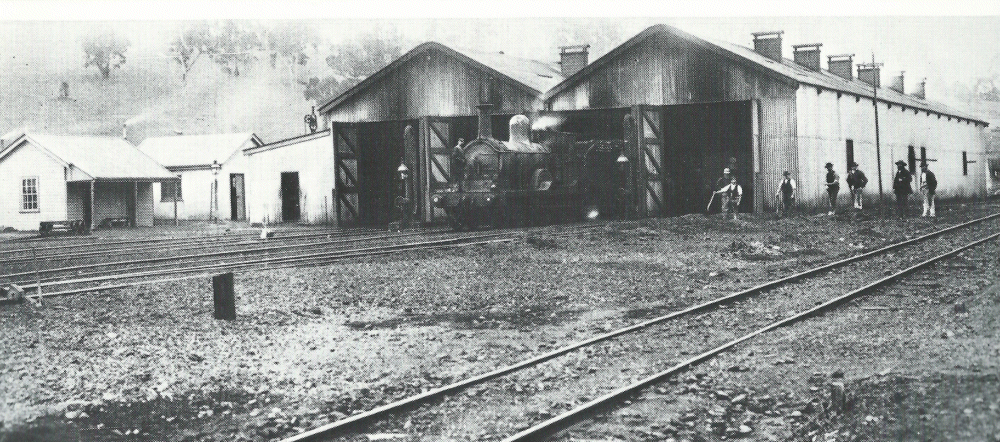
The second locomotive shed in Murrurundi as built in 1899. A D-class engine stands in the doorway. — SRA
The above working was short-lived, and on Saturday October 26, 1895, a bank-engine key was introduced on the Wingen-Blandford section. This permitted a push-up engine to assist in the rear up Warlands Range from Wingen to (old) mileage 111 at the top of the heavy grade and to return light to Wingen. In the late 1890s, an I class 2-6-2 tank was noted as the push-up engine. It is also of interest to note the I class, as well as the J131 and J522 class 2-8-0s were used on the local branchline out to the shale oil works from Temple Court, near Murrurundi. On May 17, 1900, a 50 foot (I5.5m) diameter turntable was installed at Wingen, and by 1902 an elevated water tank and a coal stage had been added, obviously to service the bank engine. The importance of Wingen to the operation of northbound freight trains was noted in the July 1919 issue of NSW Railway and Tramway Magazine: "Wingen is a small but picturesque town on the main northern line, 206 miles from Sydney. It is rather scattered, the chief buildings being a School of Arts, Post Office, store, public school and two churches (Anglican and Roman Catholic). The railway station, although small, is a busy one, the officers being kept active dealing with push-up engines, or reducing trains, etc." By 1917, all T and TF (50 and 53) class goods engines were in service (470 engines in total), and through working of these Standard Goods engines between Hamilton and Werris Creek commenced. In February 1924, the Wingen bank-engine was dispensed with and through goods loads and times were issued, set out in the Weekly Notice No.5 of that year. | The |
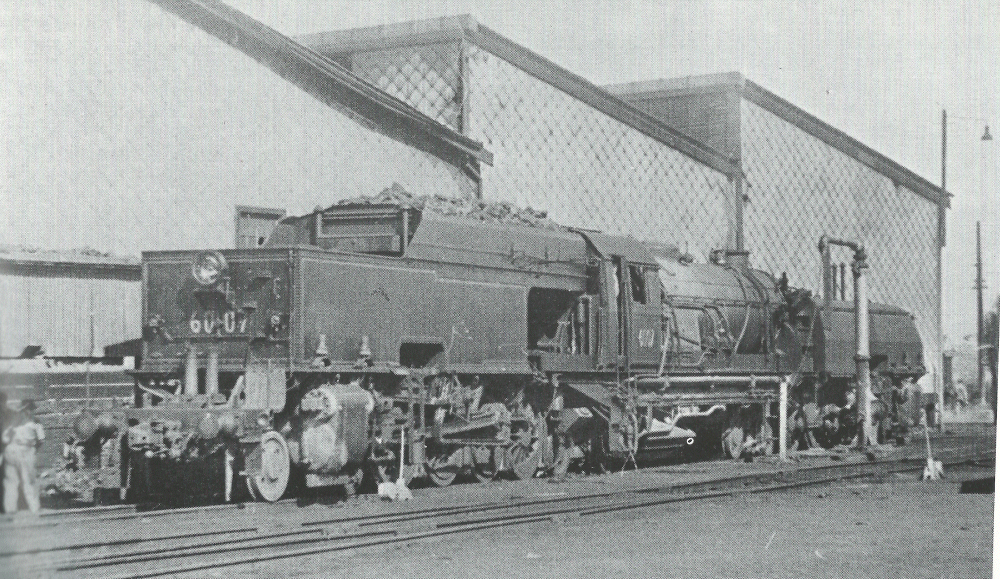
And then there was the 60 class Beyer-Garratts which came to Werris Creek in the 1950s. Pictured there in 1953, the oppressive crew conditions saw the engines removed from Ardglen tunnel route in 1960. The subsequently worked the Werris Creek to Narrabri section. — R. R. Clarke
The prime purpose of Murrurundi depot from the 1920s onward was that of a bank-engine depot, supplying men and servicing the locomotives which assisted down trains from Murrurundi to Ardglen, and up trains from Willow Tree to Ardglen. This working involved long 1 in 40 grades to the summit in Ardglen Tunnel. Precise details of the bank engine working over this difficult section of the main northern railway are contained in Robert Booth's article "Byways Of Steam - Murrurundi", which deals with bank engine operation, servicing of locomotives at Murrurundi and Willow Tree, traffic patterns and the safeworking system in operation. It forms a valuable complement to these notes. By the 1950s, a crew would do an average of four banks in a single shift, sometimes only three, and at other times, as many as five or six. Each down banking job consisted of either assisting a down passenger train in the lead from Murrurundi to Ardglen (sometimes continuing on to Willow Tree) or pushing a down goods in the rear from Murrurundi to Ardglen. | The |
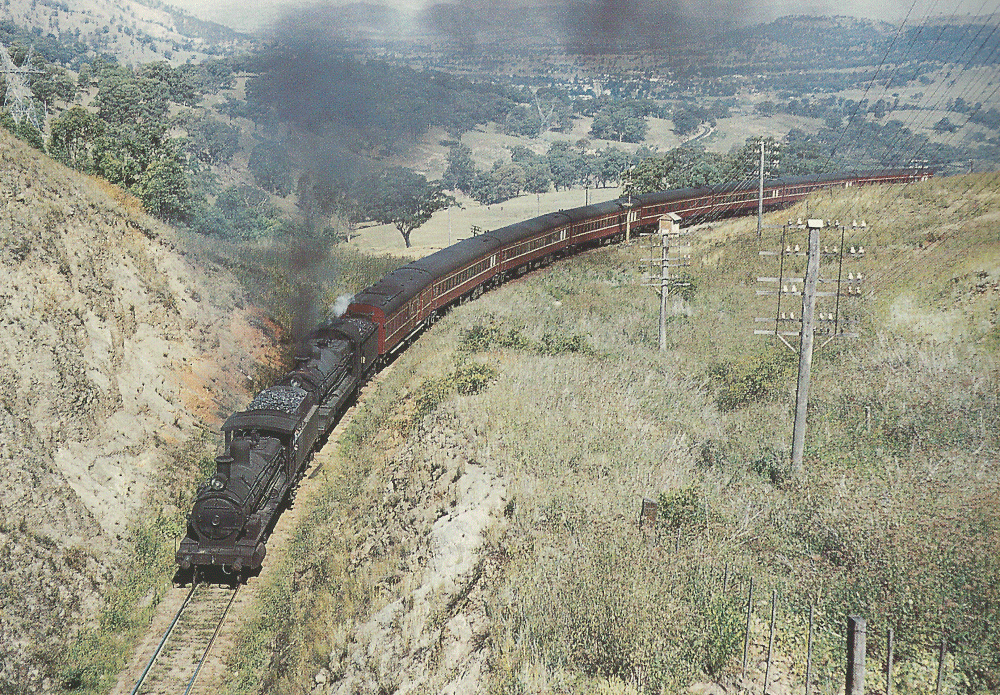
The Northern Tablelands Express approaches the Ardglen tunnel with Murrurundi in the background. Assistant 5472 and train engine 3515 have the 348-ton load of eight air-conditioned RUB set well in hand on February 4, 1959. — John Elliot
An up bank job usually meant assisting passenger or goods trains in the lead from Willow Tree right through to Murrurundi or pushing goods trains in the rear from Willow Tree to the summit of the grade at Ardglen Tunnel. A long-time Murrurundi driver recalls "To my knowledge, six banks on a shift was the most, and we quite often did that many. In my days as a fireman, (late 1940s) we had one job where you signed on at 8.41pm, assisted No.I7 Brisbane Express out of Murrurundi, through to Willow Tree, assisted No.8 North West Mail back to Murruruna, assisted No.7 down North West Mail back to Willow Tree, assisted No.12 up Glen Innes Mail back to Murrurundi, pushed No.67 down goods out of Murrurundi to Ardglen, continued light engine on to Willow Tree, and then finally assisted No.18 up Brisbane Express back to Murrurundi, to finish. In that shift you covered 90 miles (I44km), coupled up five times, uncoupled five times, turned the engine five times, shovelled down whenever possible (all small tenders in those days), grabbed a cup of tea 'on the run and got just under nine hours pay for the shift." With changes in traffic pattern and timetable alterations, the regular sign-on times later became: 8.41pm assist No.17 down Brisbane Express; 10.57pm assist No.7 down North West Mail; 3.57am assist No.I3 down Glen Innes Mail; 12.57am assist No.23 down Northern Tablelands Express. The assistance of the last-mentioned train (No.23 Northern Tablelands Express) is interesting. In the early 1950s this train ran to an accelerated timetable (eight-car, air-conditioned RUB set, 348ton load) and was assisted from Singleton to Mururundi by either a 32 or 35 class engine with a Singleton crew. The assistant engine was replaced in Murrurundi by a Standard Goods banker and Murrurundi crew, the Singleton crew and their engine returning to Singleton. All other banking jobs varied as traffic flow dictated. Crew sign-on times were 'laid-back' or 'lifted-up' as trains ran out-of-course, early, or seriously delayed due to missed crossings on the single line sections. Apart from the continual bank work, Murrurundi men knew the road on the mainline through to Werris Creek in the north and Muswellbrook in the south. In time of drought, Murrurundi men would work water trains to Quirindi and return, or to Scone as required, and would be used on mainline work when the men could not be fully employed in the depot due to insufficient bank-work duties. Going away to barracks was not a normal part of Murrurundi's work: "On occasions, we would sign on at Murrurundi, bank two or three trains, change over on to a through train and go to Werris Creek, where we would go into barracks. After resting there, we would then sign on again, work a through train to Muswellbrook, into barracks there, rest, sign-on and work another through train back to Werris Creek. From there, we then went 'home passenger'. In 19 years at Murrurundi, I only did this job three or four times." | A typical |
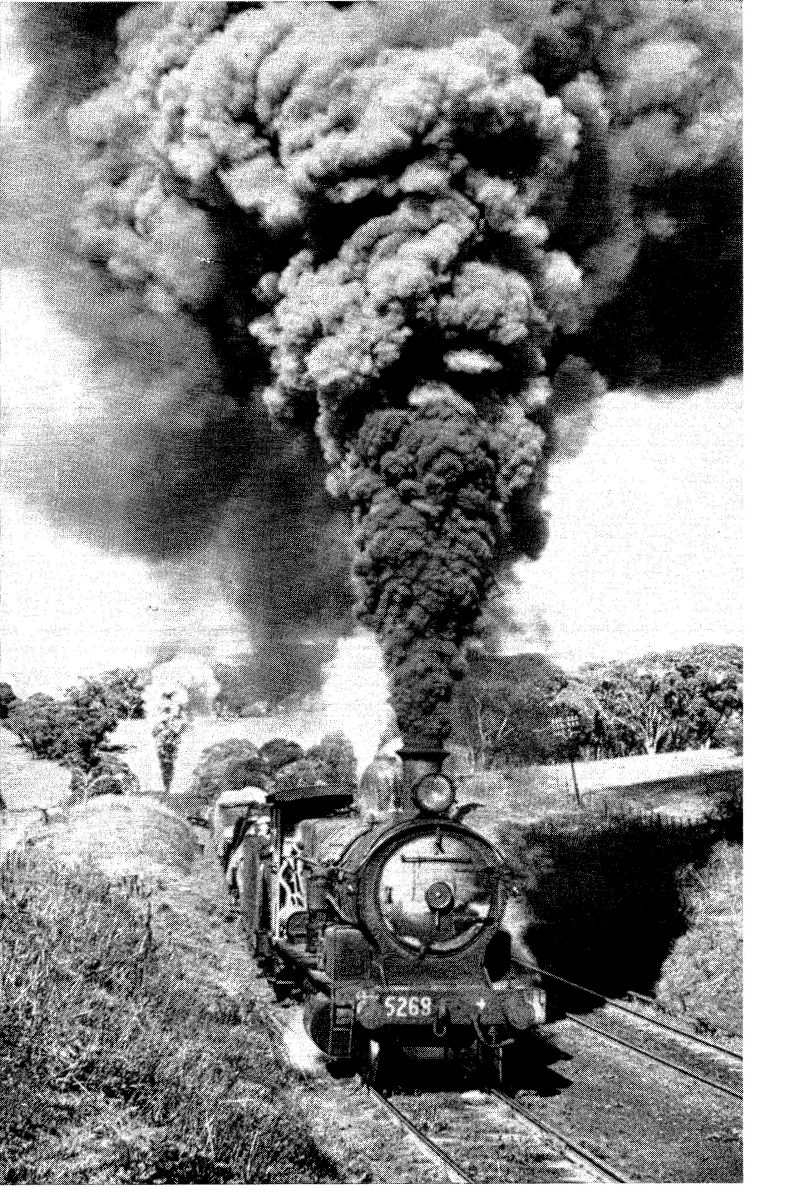
No 187 goods in the loop at Pangela and getting ready to come out having received the staff after waiting for 420 meat express from Tenterfield to pass. It is now off on the Pangela-Ardglen section. [click to enlarge] Ray Love
The Standard Goods engines of the 50 and 63 class (and 55 class prior to the 60s) were the normal bank engines over the Liverpool Range for more than 40 years. Other classes of steam locomotives had been used up until the 1920s, when a fatal accident saw the banning of all other types of engine as bankers, and the then-powerful Standard Goods 2-8-0s took over exclusively. The fatal accident happened 'around 1920', when a P (C32) class was being used as a push-up engine and it slipped badly at the tunnel, causing the train engine to stall in the tunnel. The crew on the train engine passed out due to heat, fumes and gases, the train ran away and turned over on the heavy falling grade toward Willow Tree, with the fireman on the train engine being killed. As a consequence of that incident, only the Standard Goods engines were then used as bankers. On odd occasions, problems with train running or the location of bank-engines meant that a suitable Murrurundi engine and crew were not available to assist a Mail train over the range and so a nearby train engine and crew were deputed to do the assist job. Naturally, the train engine crew would think of all sorts of excuses to get out of this job (shortage of coal, not qualified for Mail working, etc.), but all to no avail. After assisting the Mail, they returned to their train and continued on their way. | The |
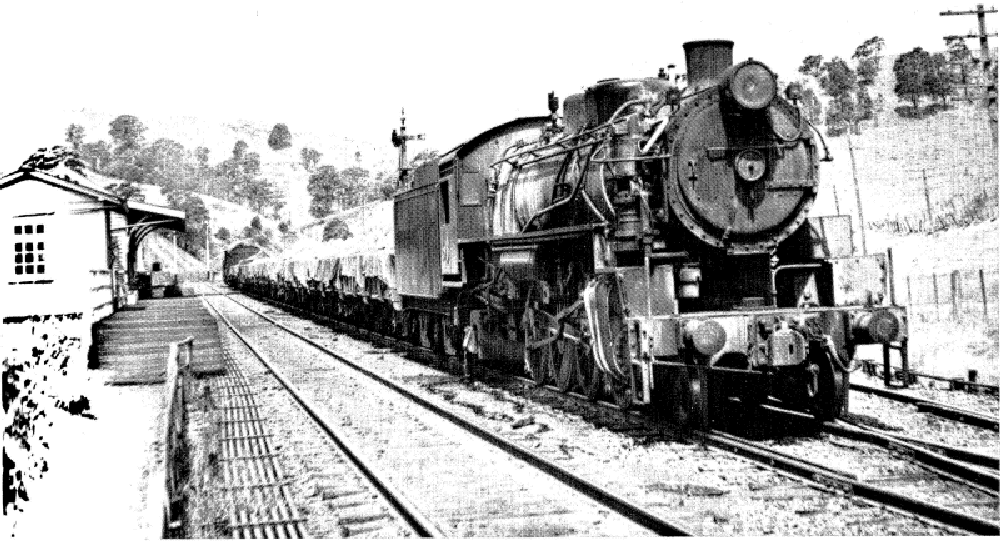
Superphosphate train 237 waits in Ardglen loop. The banking engine from Murrurundi has crept down behind the van of 237.
— R. D. Love
With the winding down of the depot and the servicing facilities in 1965, the use of Standard Goods engines declined, and the coal-burning 59 class engines arrived on the scene. Up to two or three of these 2-8-2 goods engines could be found working out of the old depot, with its run-down facilities and, to quote a driver "We still had a driver-in-charge at Murrurundi, a fuelman and a shed hand or two around the depot, and the engines usually stayed around for a few days." As the statewide drought really took hold into 1965, traffic fell away and the need for bank-engines fell away with it. More of the depot staff were on and the working of the bankers changed again. The coal-burning 59 class (or the occasional 50 or 53 class) would be fully coaled in Werris Creek, then work down to Willow Tree, work the bank jobs over the range until the tenders needed recoaling. Then they worked back to Werris Creek and replaced by a fresh engine. "When a bank crew relieved, the fresh crew had to let Control know the coal situation was and Control would then arrange to get a new engine down for bank work as the circumstances permitted." By the end of 1965, the steam locomotives departed from bank work, and the 48 class electrics took over. | The |
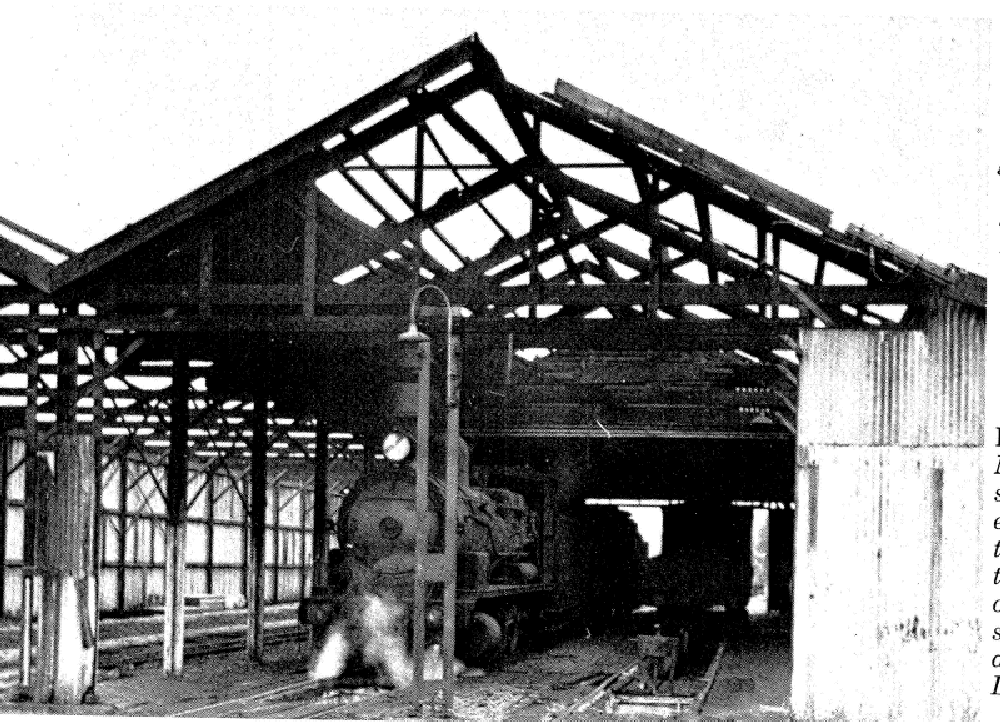
Bank engines 5326 and 5461 (obscured) enjoy minimal shelter in 1960 — M. Farrell
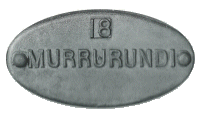
Recognition for good work is usually rare. At Locomotive Officers' Conference on March 17, 1910 with C.M.E. Thow in the chair, a travelling inspectgor reported engine P854 from Murrurundi sheds as "being kept in a very creditable condition, due chiefly to driver McCullum." Mr. Thaw directed letter of commendation be written to him. In 1913 the same engine, P854 hauled the official train to open the railway into Taree. This engine later became 3344. As previously stated, Murrurundi depot was opened in September 1891, and in October 1912 the then recently appointed Chief Mechanical Engineer, E.E. Lucy, signed a drawing giving authority for the fabrication and fitting of depot plates (then termed 'barge plates'). Old steam depots like Murrurundi figured prominently on the list of plates to be made. At the time, Murrurundi was given the depot number of nine, and 75 brass 'barge plates ' bearing the number and name 9 Murrurundi' were authorised to be cast and fitted to the engines allocated there. (Obviously, only 10 or 12 of these plates would have been required at any one time, thus giving 60-odd spares to be fitted when needed.) A few short years later, Werris Creek depot assumed the depot number nine, and Murrurundi became depot No.18, and both cast-iron and brass plates were noted for depot No.18. The time of this change in depot number is not certain, but it is possibly linked to either one or both events, whereby, in 1926, the District Superintendent was transferred to Werris Creek from Murrurundi or when Werris Creek depot was enlarged. In 1917, a new roundhouse was completed there and it took over from Murrurundi as the headquarters for locomotive operations in the north-west and north of the state. Murrurundi became a sub-depot of Werris Creek with the opening of the latter (perhaps explaining the change in depot numbers), all administrative decisions being made by the parent depot some 36 miles to the north. It is of course possible that in fact no '9 Murrurundi' plates were ever cast, for, of the theoretical 75 plates originally called for on the drawing, none has ever been seen by the 10 or 12 known collectors of depot plates. | General |

Large section of the original shed had been dismantled by the late 1950s. 5376 is in the removed section. Doorways on the right lead to entrances and the workshop and offices — R. D. Love
The 'writing was on the wall' for Murrurundi depot when, on June 18, 1917, through working of !ocomotives between the Newcastle area and Werris Creek commenced. The event warranted mention in the NSW Railway and Tramway Budget, the staff magazine of the day. "Instead of the old arrangement, which provided for engines and crews being changed on practically every train, the system now adopted allows of trains being worked through by the one engine. This has been made possible by the large numbers of new engines of the T and TF class which have been put into use for this service. "With the changing of the trainmen at Muswellbrook instead of being relieved at Murrurundi and Singleton, as hitherto, a better day's work is provided, which will be appreciated by the men on the running staff, and at the same time prove an economical arrangement so far as the Department is concerned. "To meet the altered conditions, extensive changes have been made in the personnel of the staff and in the allotment of trainmen, engines, etc." On March 31, 1926, the Office of the District Superintendent was transferred from Murrurundi to Werris Creek. It had originally been located at Tamworth, and was established in Murrurundi on September 17, 1896. Murrurundi had therefore been the administrative centre for traffic operations for the whole of the north of the state for 30 years. With the opening of new branchlines in the north and north-west of the state, and resultant increases in traffic and business, Werris Creek became an important and busy junction and it was deemed more desirable to have the centre of supervision at the junction of the two major lines in the north. With the increase in size of Werris Creek both from a traffic and locomotive viewpoint, Murrurundi was no longer the major railway centre. One of the important and regular duties performed by the shed men at Murrurundi was the cleaning and sterilisation of the sets of respirators used over the range by the train crews. Respirators were used at Murrurundi for more than 40 years. In the later steam days one estimate is that 30~40 sets were available for use. All had to be cleaned and prepared for use by train crews and be readily available at any time. All bank engines were issued with them and all through train crews picked up a set. After passing through the tunnel, on the down, the train-engine crew dropped them off at either Ardglen or Willow Tree, to be returned to Murrurundi depot for cleaning. Like many interesting items of equipment associated with the operation of steam locomotives, these relics have faded from the scene. However, the necessity of providing fresh air for locomotive crews working diesel electrics through confined tunnels has not faded away. It is still a requirement for breathing devices to be available for diesel crews in certain circumstances. The subject of respirators and their successors will be the topic of a future essay. | The boss |
As stated in the section dealing with crews, Murrurundi ceased being a railway town near the end of 1966, when the remaining engine men were transferred away to other depots. It is true to say that traffic employees, such as station staff and signalmen together with some fettlers, remained in Murrurundi for a time after that date, but once loco had gone, the town became just like many others, and was on the decline as a railway centre. Some men had a long association with the town and the railway. Local schoolboys joined the railway at the local locomotive depot, in the railway yard or on the station and spent their entire working lives there. In a railway town like Murrurundi (others come to mind, like Werris Creek and Junee) it is the main employer, and the demise of the local locomotive depot had a devastating effect on the town, especially when men with 25 and 30 years of service, too young to retire, are required to move to other locations, perhaps many miles distant. In that situation, men have to remove their families from the town, in some cases where their relations remain as residents, take the children out of school and make a new home hundreds of miles away. The move is not voluntary, nor are there increased grades or financial incentive, but is essential in order to retain one's seniority and current position. This occurred in the case of the old depot of Murrurundi and the men were required to start a new life away from their hometown. A last remnant of Murrurundi locomotive depot is a rusting 40,000 gallon cast-iron elevated water storage tank, standard style and fitted with a cover. Situated on the hill overlooking the site of the depot, is no longer required for town water supply purposes. | 1966 |
The old depot of Murrurundi has long closed, both from a locomotive and crew viewpoint, it being more than 20 years since the loco sidings were placed out of use. The site is overgrown with weeds, it is difficult to imagine it as being one of the most important in the state and to appreciate the intense locomotive activity which once took place there, 24 hours a day, 7 days a week for more than 70 years. Similarly, it is hard to visualise the headquarters for the main north being located near Murrurundi station. The old, but well preserved station building now stands unattended, an almost unbelievable circumstance. The bank engines still operate over the Liverpool Range: usually three modified 45 class dieselelectrics (called 35 class), working as a multipleunit, come down regularly from Werris Creek, push or assist through coal trains in the up direction and return to the Creek. Progress and modernisation are intended to bring efficiency and the current methods in use over the Liverpool Ranges echo that ideal, but it is hard to forget the sights and sounds of three old Standard Goods 2-8-0s labouring on the 1 in 40s in the freezing night air near Ardglen so many years ago. |
Name: Byways 3 of Steam | Editor: Ray Love |
Date: Eveleigh Press (1991) (out of print) |